Loading article...
November 2, 2026
Pension Finance Update October 2026
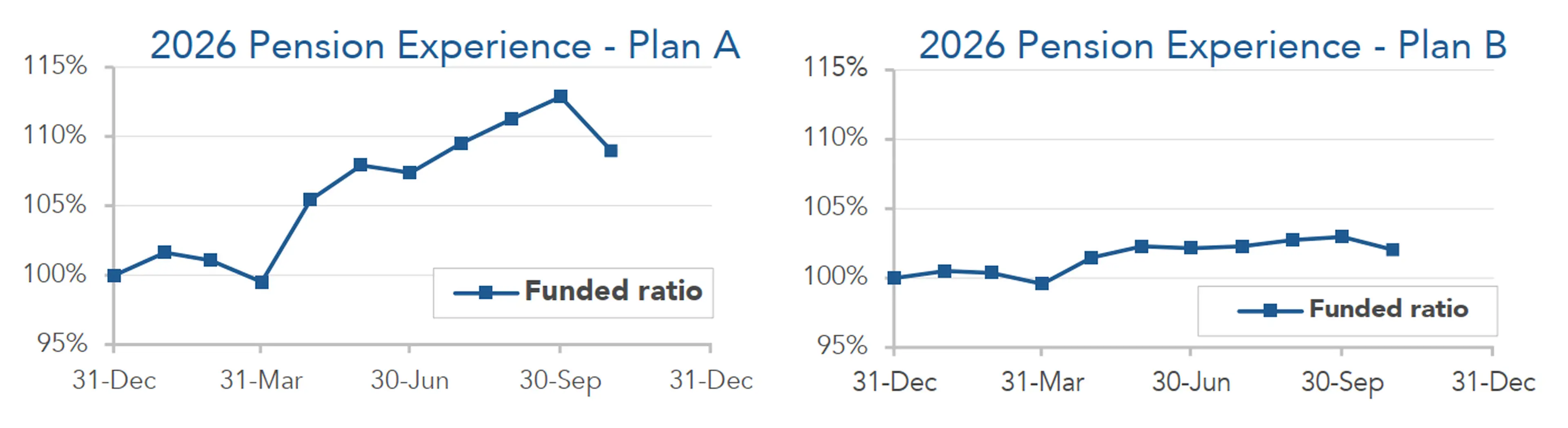
Pension finances suffered their worst month of the year in October, due to declining stock markets and lower interest rates. Both model plans we track1 lost ground during October: Plan A lost almost 4% last month but remains up 9% for the year, while the more conservative Plan B lost 1% during October but is still up 2% through the first ten months of 2026:
Assets
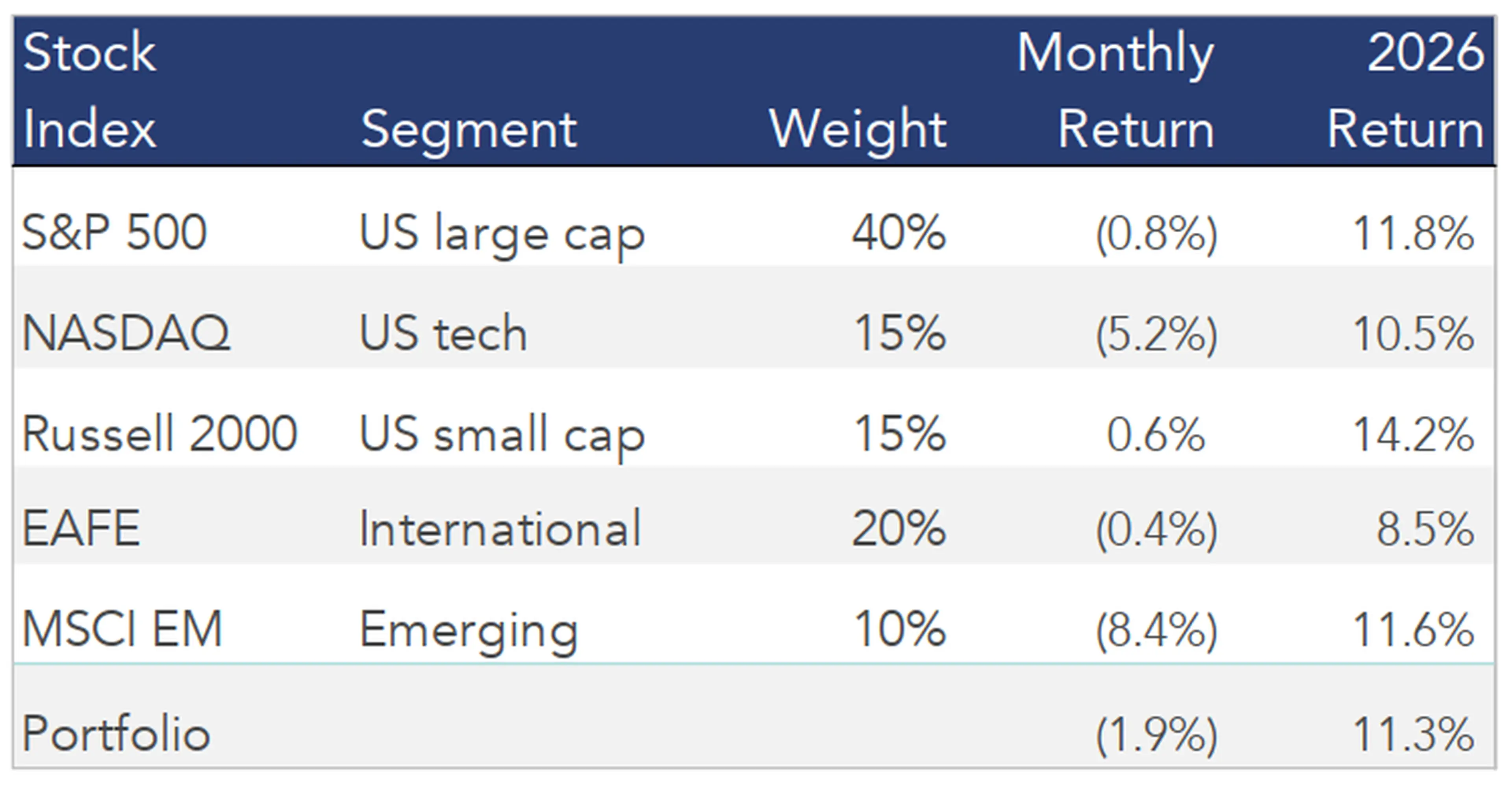
Stocks mostly lost ground in October. A diversified stock portfolio lost more than 2% last month but remains up more than 11% through the first ten months of 2026.
Interest rates fell 0.3% last month. As a result, bonds gained 2%-4%, ending October down 2%-4% for the year, with long-duration corporate bonds faring worst.
Overall, our traditional 60/40 lost a fraction of 1% last month but remains up almost 6% for the year through October, while the conservative 20/80 portfolio gained 1%-2% last month and is now even through the first ten months of 2026.
Liabilities
Pension liabilities (for funding, accounting, and de-risking purposes) are driven by market interest rates. The first graph below compares our Aa GAAP spot yield curve on December 31, 2025 and October 31, 2026 (along with the movement in the curve last month). The second graph below shows our estimate of movements in effective GAAP discount rates for pension obligations of various duration during 2026:
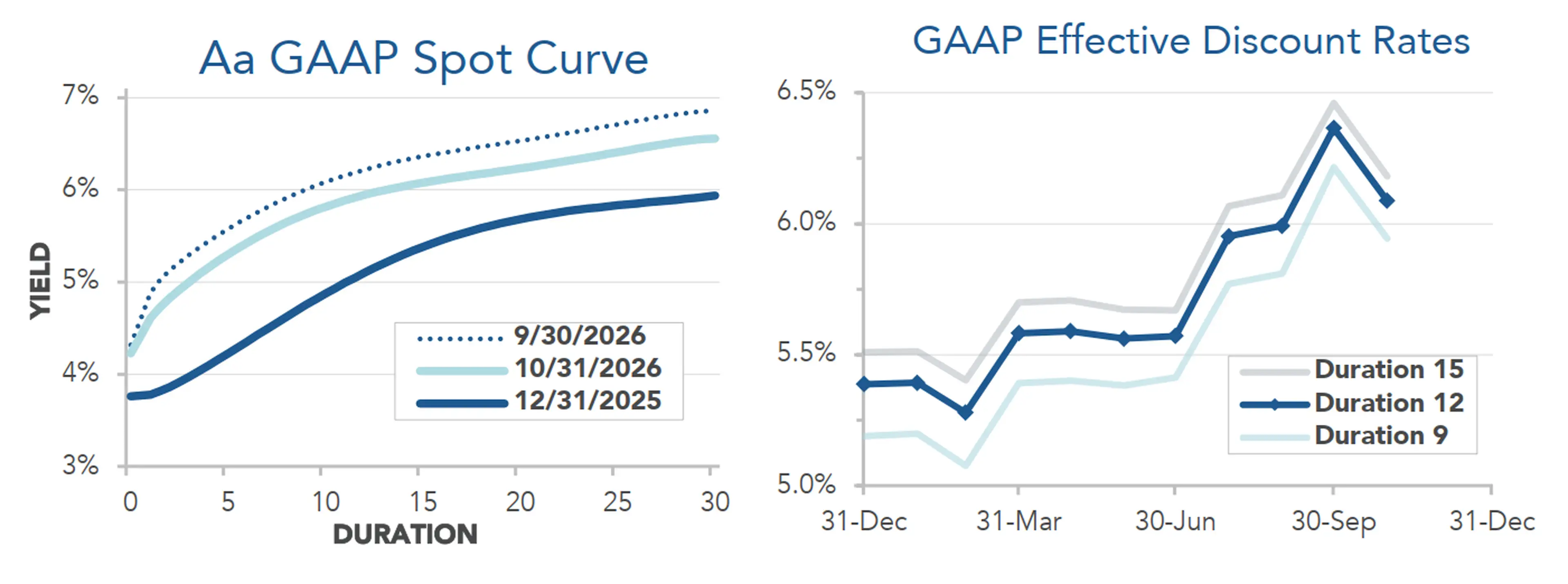
Corporate bond yields fell almost 0.3% in September. As a result, pension liabilities increased 3%-4% last month and are now down 2%-4% for the year through October, with long-duration plans seeing the largest decreases.
Summary
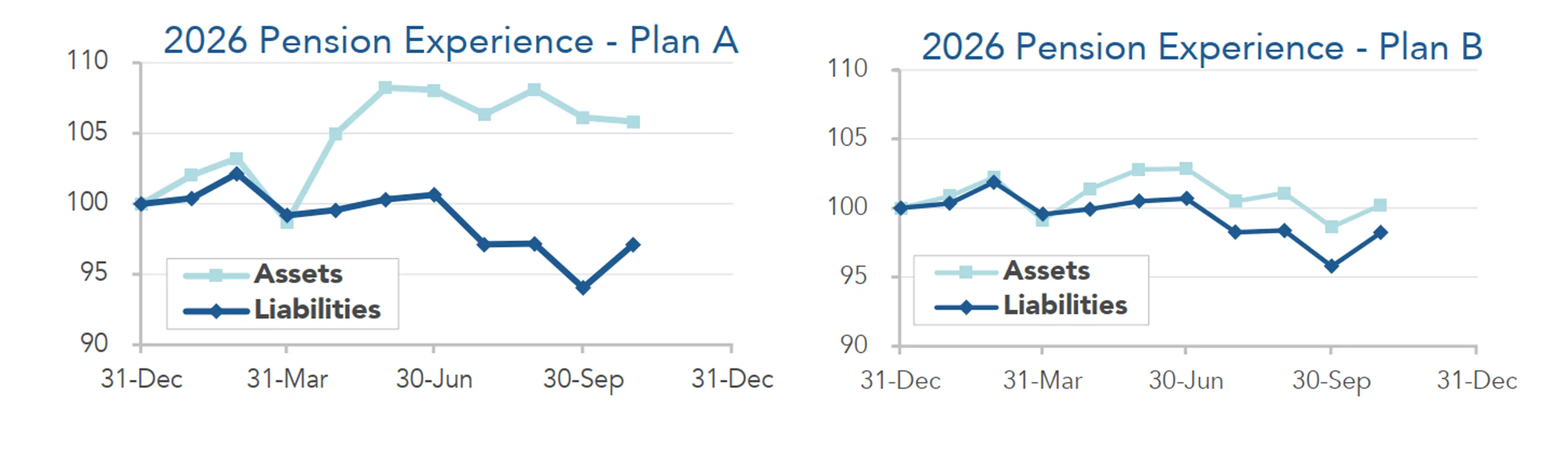
Lower stock prices and lower interest rates add up to a bad month during October, but with two months to go, 2026 still looks like yet another good year for pension finances. The graphs below show the movement of assets and liabilities during the first ten months quarters of 2026:
Looking Ahead
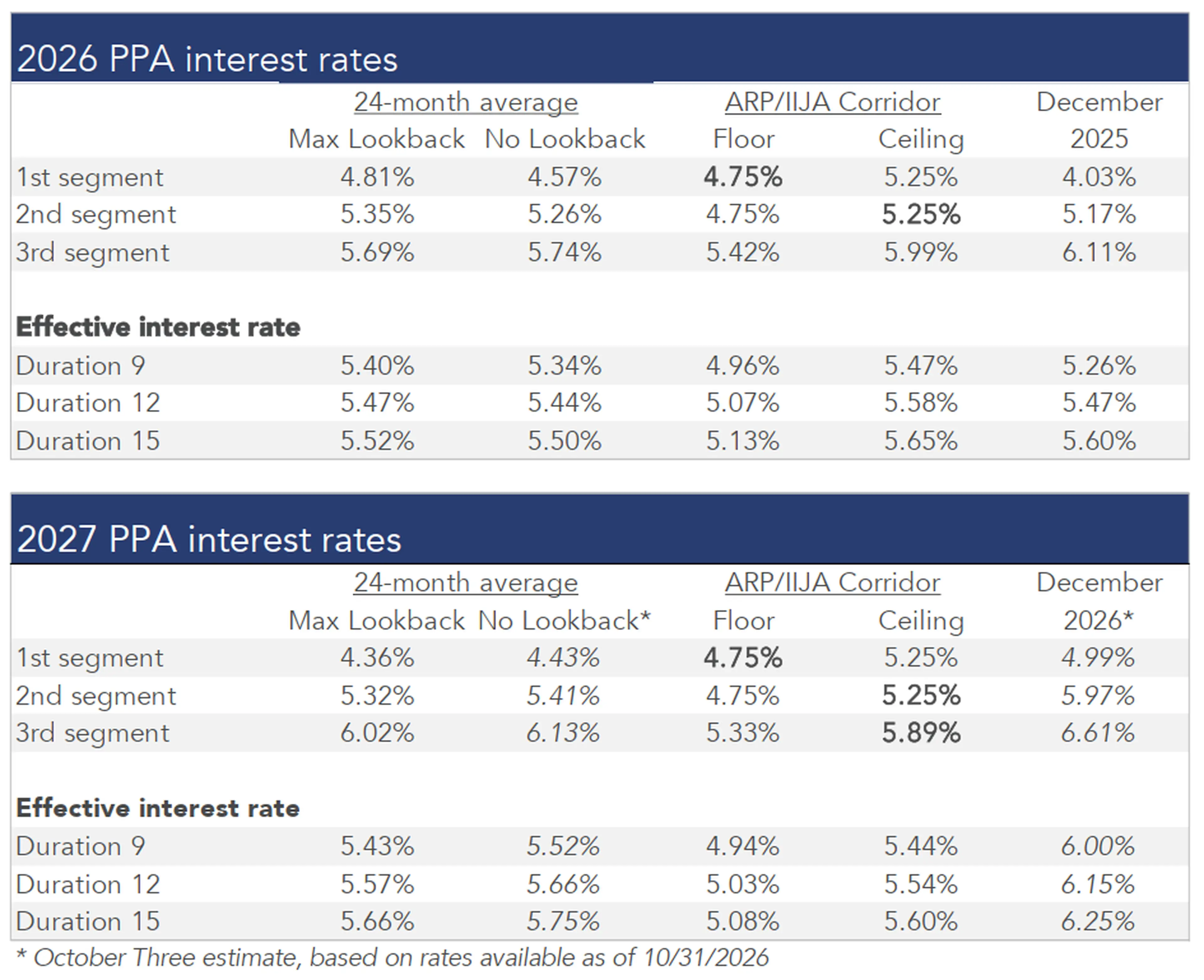
Interest rates moved lower last month, after reaching levels not seen in more than two decades in September. At current rates, pension “funding relief” could force sponsors to overstate liabilities by 5%-10% in 2027 (see table below) and later years, increasing required contributions and forcing some overfunded plans to make additional contributions.
Discount rates fell last month. We expect most pension sponsors will use effective discount rates in the 5.9%-6.3% range to measure liabilities right now.
The table below summarizes rates that calendar-year plan sponsors are required to use for IRS funding purposes for 2026, along with estimates for 2027, including the rate “corridor” that applies to the 24-month average rates under funding relief for each segment.
1Plan A is a traditional plan (duration 12 at 5.5%) with a 60/40 asset allocation, while Plan B is a largely retired plan (duration 9 at 5.5%) with a 20/80 allocation with a greater emphasis on corporate and long-duration bonds. We assume overhead expenses of 1% of plan assets per year, and we assume the plans are 100% funded at the beginning of the year and ignore benefit accruals, contributions, and benefit payments in order to isolate the financial performance of plan assets versus liabilities.